By Mark Voger, author
‘Son of Monster Mash’
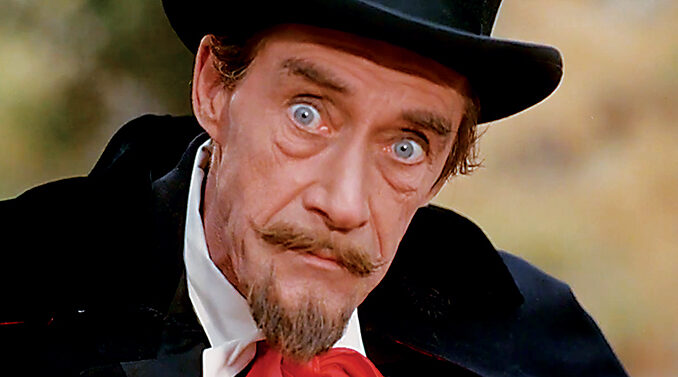
I was always a monster movie freak. I especially loved the Universal monster movies. As a kid in the Sixties and Seventies, I was aware that some of the actors in those films were still alive. One such survivor was John Carradine, who played Count Dracula in Universal’s “House of Frankenstein” (1944) and “House of Dracula” (1945).
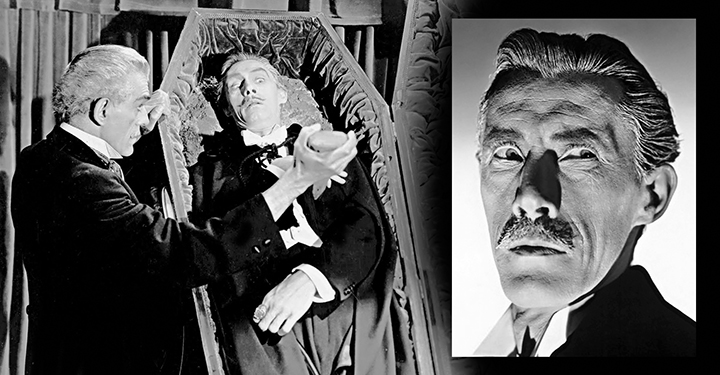
Carradine was a different Dracula. He looked nothing like the Bela Lugosi prototype with the dark, slicked-back hair and widow’s peak. Carradine’s Dracula was tall, thin, white-haired and looked very elegant in his top hat and tuxedo.
But what really sold Carradine’s Dracula was his resonant, stentorian voice. Carradine could lay on the deceptive, genteel charm but thick, which is what Dracula is all about.
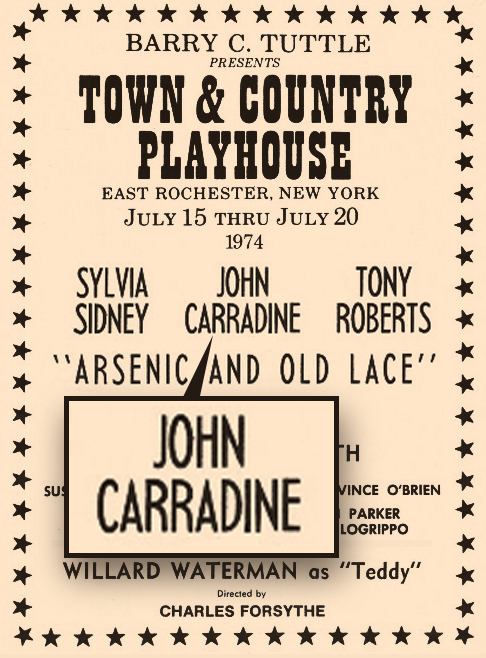
One day in 1974, while perusing The Philadelphia Bulletin, I spotted an ad for the play “Arsenic and Old Lace” starring Carradine, which was coming to the Playhouse in the Park in Philadelphia. (Above is a program from another venue on the tour.) I knew instantly that Carradine must be playing murderous Jonathan Brewster, the role originated by Boris Karloff in the original 1940s Broadway production. Also in the cast were Sylvia Sidney, another movie veteran, and Tony Roberts, then of the Woody Allen troupe. My parents promised to take me to see the show.
That never happened. I was crushed, but at 16, I understood that parents can’t keep every promise.
PHILLY TV APPEARANCE
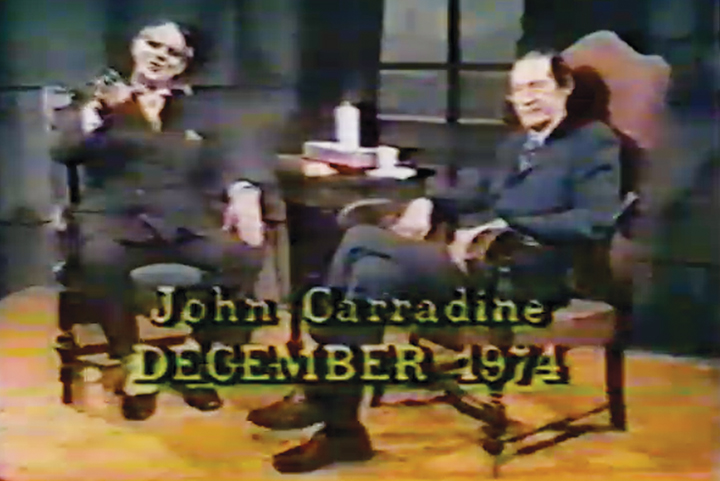
Later that year, Channel 17 in Philadelphia aired an interview with Carradine that I’m guessing was taped while the actor was in Philly with “Arsenic and Old Lace.” This happened on one of my favorite TV shows of all time: “Scream In” starring Manayunk magician Joe Zawislak as Dr. Shock, a ghoulish character who hosted horror movies. Zawislak was in costume and in character as Dr. Shock when he interviewed Carradine.
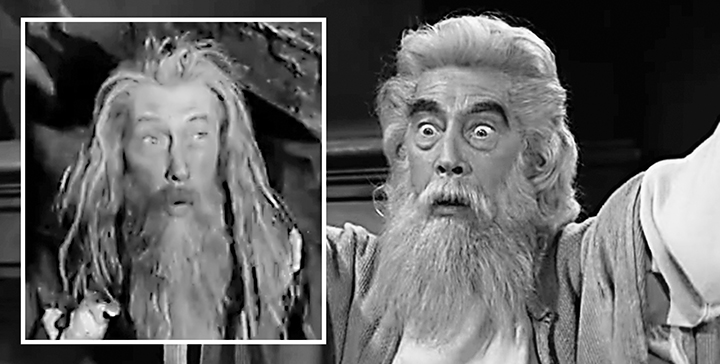
“Scream In” happened to be showing “House of Frankenstein” (1944), Carradine’s first of four movies as Count Dracula. During the interview, Dr. Shock replayed the scene in which Karloff removes a wooden stake from Dracula’s skeleton and, via the miracle of state-of-the-art 1940s FX, Carradine slowly comes into view.
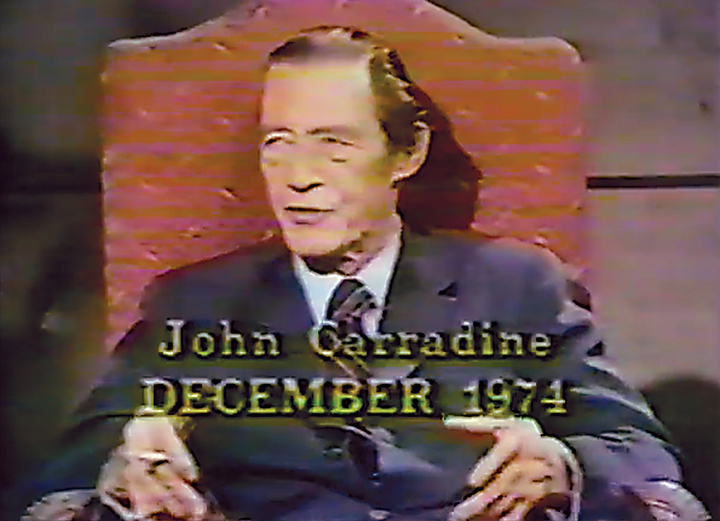
Carradine himself narrated the scene: “I always thought they shouldn’t have shown the whole skeleton. They should have had a closeup. When he becomes Dracula, he’s fully dressed. Where were the clothes?
“I want you to note something here. This man hadn’t drawn a breath for 25 or 30 years, undead in the coffin. Notice I open my mouth and gasp. This was my idea, not the director’s, eh?”
(See it for yourself HERE. Carradine’s narration is at the 17:25 mark.)
BACK ALLEY ENCOUNTER
Perhaps it was this missed opportunity, not getting to see Carradine in “Arsenic and Old Lace”? In 1980 when I was 22, I was compelled to drag my carcass from South Jersey to Manhattan, which then seemed like a million miles, to see Carradine in what became the last of his nine roles on Broadway.
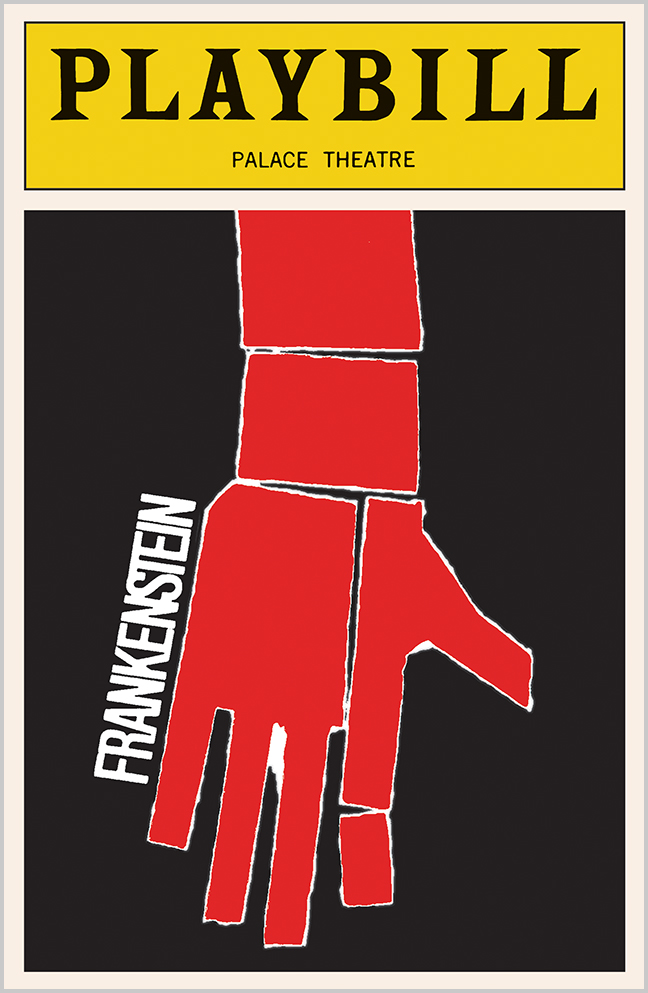
The play was “Frankenstein” at The Palace Theatre (est. 1913). I learned about it in a 10-second TV commercial with a voiceover by Carradine. I just thought: “I know that voice.”
In the pre-internet days, God only knows how I got tickets or even verified Carradine’s involvement. But I scored four seats for myself; my old college roommate Curt; and our girlfriends at the time. (Discretion forbids me to share their names.) I asked a work buddy who was a Manhattan-phile to recommend a nearby hotel in the city. He put me in quite a pricey place: the Hotel St. Moritz (est. 1930) on Central Park South. (I had to tip people, and on my salary as a proofreader for the Yellow Pages!)
Our party caught the afternoon matinee of a preview performance on Saturday, Dec. 20, 1980. (Opening night was 15 days away.)
As I’d planned, the four of us convened at the theater two hours before curtain, and we ventured down a back alley. There, we saw some worker guy. I asked him, rather naively, “Will John Carradine come through here?” My hand to God, the guy actually told me: “He ain’t here yet, but this is where he comes, yeah.”
We hadn’t been waiting too much longer when we spotted a little old man walking unsteadily (and unaccompanied) with a cane in our direction. I had recently seen Carradine in a terrible movie called “The Boogeyman” (1980), in which he wore freshly applied shoe-black hair dye, and didn’t look much different than he did in the Sixties. But in that alley in 1980, Carradine appeared shrunken and even a bit disheveled.
With a quick “Be right back” to our girlfriends — yeah, I still think that was unchivalrous of us — Curt and I followed Carradine onto the tiny cage of an elevator that would bring him to his dressing room floor. (This unplanned move on our part was the result of impulsiveness and stupidity.) It was just me, Curt, the elevator’s operator and Carradine, whose back was to us. As we rode up, I broke the silence and spoke from the heart: “Mr. Carradine, we came a long way to see you. We just wanted to say that we’re glad that you’re still with us and still working.”
A moment went by, and I assumed Carradine hadn’t heard me. Curt and I exchanged a quick “oh well” look. Then Carradine replied without looking our way. He said, simply, “I’m 75 years old, and I’m not finished yet.”
Carradine stepped out of the cage without another word. The operator was kind enough to take us back down. We reunited with the girls, who were happy for us that we finagled our little John Carradine moment.
THE PLAY’S THE THING
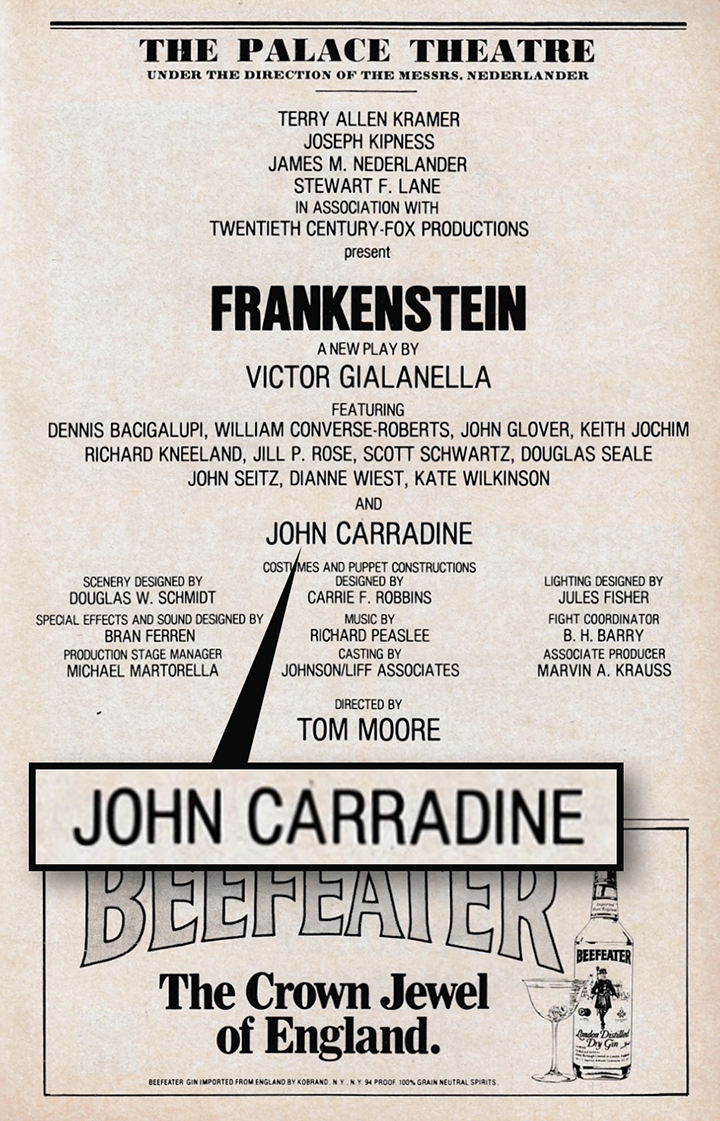
“Frankenstein” was a troubled production. Written by Victor Gialanella and directed by Tom Moore, it made history as the costliest flop on Broadway (topping $2 million) up to that time. There were 29 previews beginning Dec. 9, 1980. Savaged by the critics, “Frankenstein” opened and closed on the same day: Jan. 4, 1981.
In the play, Carradine played DeLacey, a blind hermit. Monster movie nerds know that way back in 1935, he played one of the two woodsmen who discover the Frankenstein monster (Karloff) in the hut of a blind hermit (O.P. Heggie) in “The Bride of Frankenstein.” So Carradine’s casting in this role held significance.
(Yet, Carradine’s bio in Playbill made no mention of “Bride,” nor the more than 50 horror films he’d made up to that point. Just saying.)
Anyway, here’s how I remember that Dec. 20 matinee. I thought it was phenomenal. So did the audience. “Frankenstein” was a spectacle. In Douglas W. Schmidt‘s set design, there was a crackling fire in the drawing room and dazzling pyro in the laboratory. People were applauding the scenery changes, they were so artfully done. Fifteen days ahead of opening night, this production was polished like a diamond.
I got teary-eyed during Carradine’s big scene, in which the hermit is robbed and murdered by two big, burly goons. The shriveled little man I saw in the back alley earlier that afternoon was positively galvanized. Now costumed in a wig, beard and rags, Carradine looked kind of like he did in “The Black Sleep” (1956) and the “Twilight Zone” episode “The Howling Man” (1960).
The murder scene was very physical. Carradine played it like it was the last scene of his life.
I’ll tell you one more thing about this old pro. Carradine’s character was killed in the first act. But when it came time for the curtain call, there he was, still in costume as DeLacey, to take his bow. That’s a pro.
After “Frankenstein” closed on opening night, a Channel 5 reporter asked one of its producers, Terry Allen Kramer, how it felt to have produced a “colossal bomb.” She replied: “I don’t think it was a colossal bomb. My life doesn’t begin and end with what some critics have to say.”
Go figure: According to the IBDB (the Internet Broadway Data Base), a trusted source, “Frankenstein” actually won a Drama Desk Award for Outstanding Lighting Design.
‘BEAUTIFUL PLACE TO DIE’
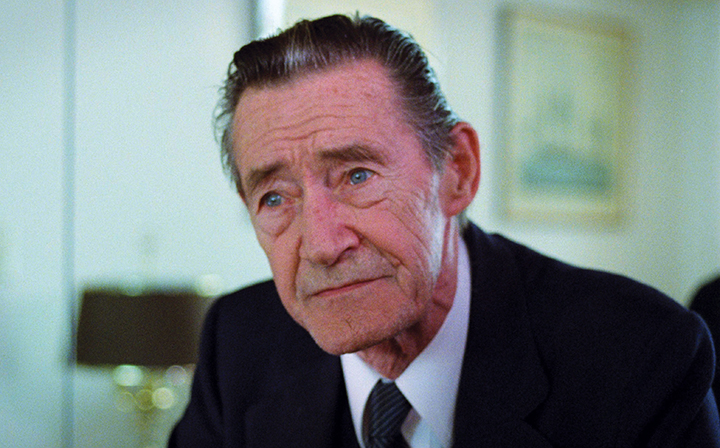
By coincidence, Dec. 20, 1980, was also the night one of the actor’s sons, David Carradine, hosted “Saturday Night Live.” So father and son were both working in the city that day. We watched it from the St. Moritz. I remember David ending his opening monologue by sprinkling sand on the stage and dancing a soft-shoe.
John Carradine kept working. A highlight — in casting if not the movie itself — was “House of Long Shadows” (1983), in which Carradine joined fellow horror icons Christopher Lee, Peter Cushing and Vincent Price.
I remember thinking Carradine was going to live forever. But he died in 1988 at age 82 in Milan, Italy, after climbing more than 300 steps of the Duomo di Milano (est. 1385), a Gothic cathedral. Reportedly, his last words were: “Milan, a beautiful place to die.” Carradine died in the arms of his son David.
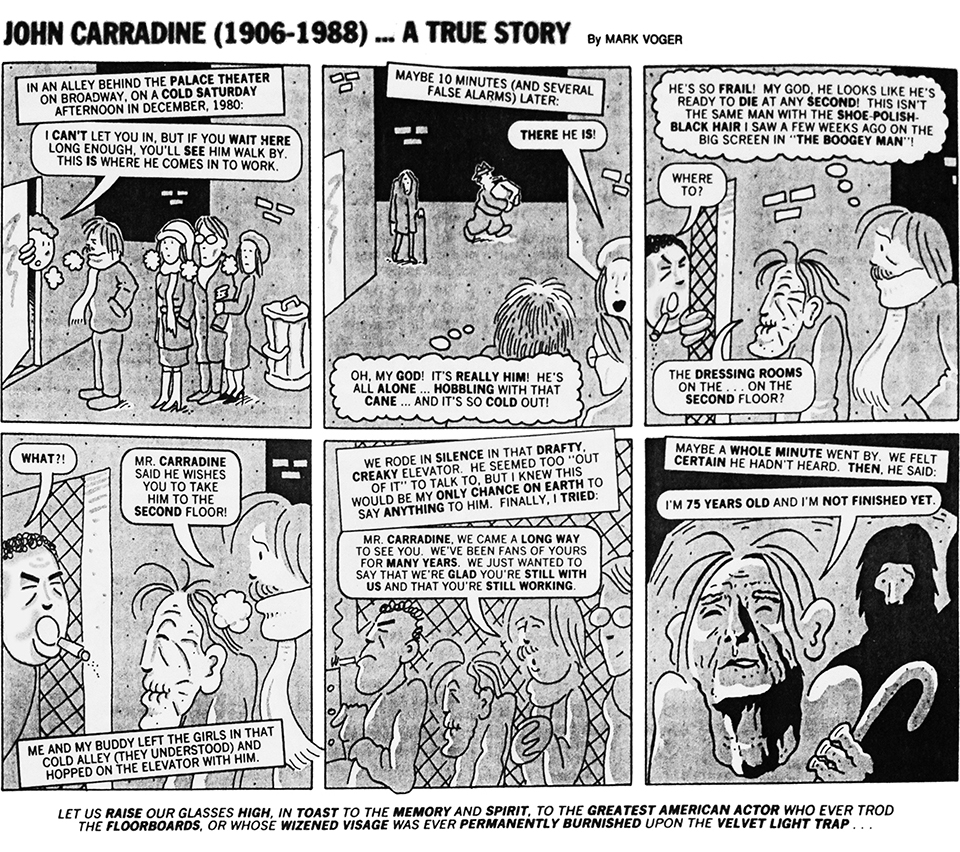
Above is a comic strip I did in 1988 to commemorate Carradine’s passing. (It has a few details I hadn’t remembered.) Curt wrote the sentiment beneath the ‘toon: “Let us raise our glasses high, in toast to the memory and spirit, to the greatest American actor who ever trod the floorboards, or whose wizened visage was ever permanently burnished upon the velvet light trap.”
POST SCRIPT
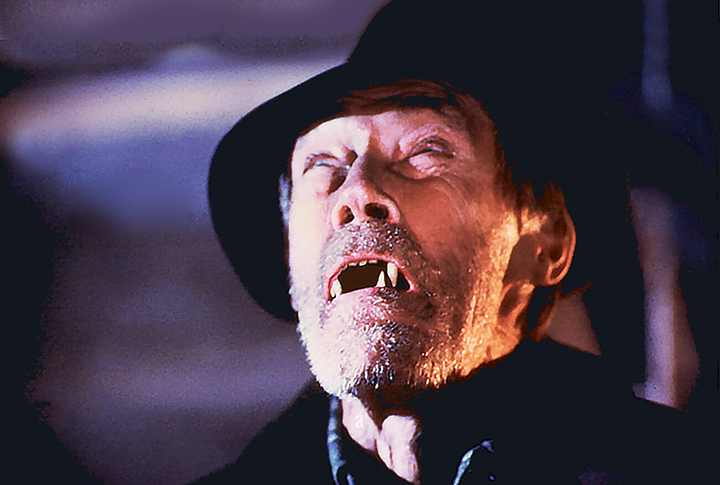
Around the time Carradine appeared in the Broadway play “Frankenstein,” the actor had lately been active in the genre, showing up in contemporary horror films such as “Nocturna: Granddaughter of Dracula” (1979), a horror comedy starring Vietnamese belly dancer Nai Bonet; “The Boogey Man” (1980); “Monstroid” (1980); and Joe Dante‘s “The Howling” (1981, above) in which the old-timer actually transforms into a werewolf!
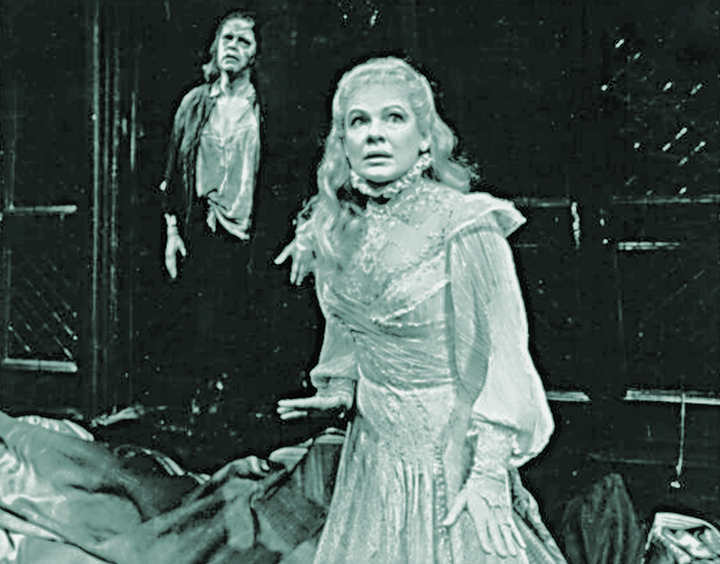
Also in the cast of “Frankenstein” on Broadway were Dianne Wiest as Elizabeth and Keith Jochim as the “Creature.” Wiest, of course, went on to win two Oscars. Jochim was later in “The Witches of Eastwick” (1987).
The “Frankenstein” poster design was by Gilbert Lesser, who also designed the posters for “Equus” and “The Elephant Man.”
Speaking of David Carradine on “Saturday Night Live”: He dressed as his “Kung Fu” character Kwai Chang Caine in a skit titled “Kung Fu Christmas,” which also featured Eddie Murphy as a Black Bruce Lee.
Speaking of the Hotel St. Moritz: In 1930, Errol Flynn had a tryst with “the Russian princess, Naomi Tiarovitch” (not her real name) in the very same hotel, according to his posthumous memoir, “My Wicked Wicked Ways.”